ABC Imagem Cardiovasc. 2026; 39(3): e20260080
Unicuspid Aortic Valve in a Young Woman Associated with Aortopathy and Atrial Septal Defect: Therapeutic Implications

DOI: 10.36660/abcimg.20260080i
Abstract
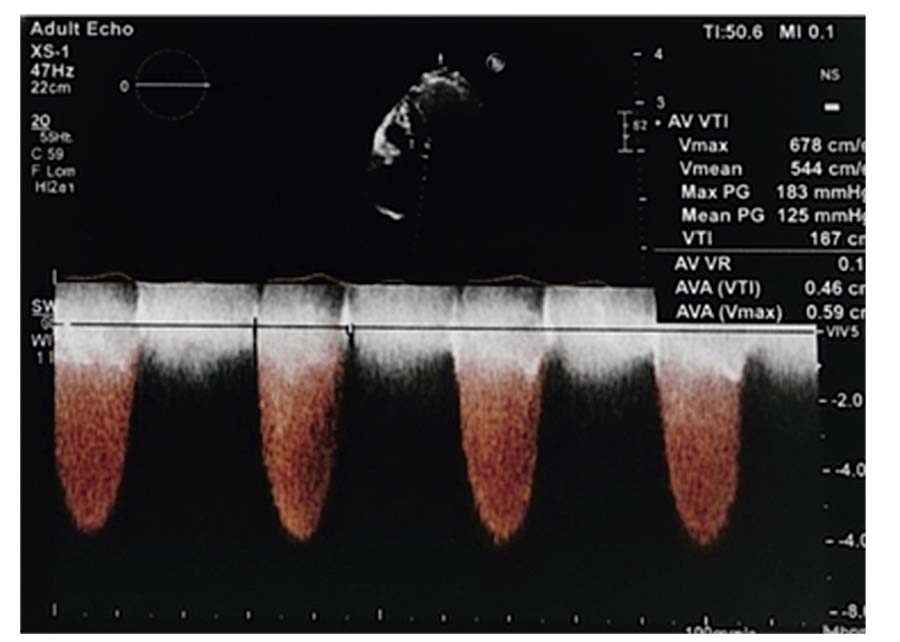
Unicuspid aortic valve (UAV) is a rare congenital anomaly, frequently associated with early progression to severe aortic stenosis and aortopathy. We report the case of a 38-year-old woman who presented with difficult-to-control hypertension and progressive exertional dyspnea. Transthoracic echocardiography revealed critical aortic stenosis (peak gradient of 183 mmHg, mean gradient of 125 mmHg, and valve area of 0.59 cm2), associated with mild aortic regurgitation and ascending aortic dilation (45–46 mm). Three-dimensional transesophageal echocardiography confirmed a unicommissural UAV, as well as an ostium secundum atrial septal defect with a left-to-right shunt (Qp/Qs = 2.3). Given the significant hemodynamic impact, aortic valve replacement with a bioprosthetic valve was performed. The patient developed a conduction disturbance during the postoperative period, requiring permanent pacemaker implantation. At the 6-month follow-up, she was asymptomatic, and the prosthetic valve was functioning normally. This case illustrates the importance of advanced echocardiography in identifying rare valvular anomalies and highlights the uncommon association between UAV, aortopathy, and atrial septal defect in a young woman, with relevant implications for clinical and surgical management.
8