
This policy proposes principles and practical rules for the ethical, transparent, and responsible use of artificial intelligence (AI) tools by authors, reviewers, editors, and the editorial staff of ABC Imagem Cardiovascular. The document was developed based on recommendations from international biomedical publishing organizations, including the International Committee of Medical Journal Editors (ICMJE), the Committee on Publication Ethics (COPE), the World Association of Medical Editors (WAME), the Council of Science Editors (CSE), JAMA Network, BMJ, Nature/Springer Nature, and Elsevier.
Central Principle:
AI tools may assist human work, but they cannot replace human responsibility, scientific judgment, responsible authorship, confidentiality, the integrity of peer review, or editorial independence.
Executive summary
| Topic | Key Recommendation |
| Authorship | AI tools cannot be authors, co-authors, or collaborators. |
| Responsibility | Authors are responsible for all submitted content, including AI-assisted content. |
| Transparency | Substantive use of AI must be disclosed, including tool, version, purpose, and stage of the manuscript or research. |
| Clinical Data | Identifiable or potentially identifiable patient information must not be entered into public or insecure AI tools. |
| References | References suggested by AI must be manually verified in reliable sources; false references constitute an ethical violation. |
| Scientific Images | AI must not alter scientific images or data in a way that changes interpretation, diagnosis, or evidence. |
| Peer Review | Reviewers must not enter confidential manuscripts into public AI tools or delegate review tasks to AI. |
| Editors | AI may support editorial workflows, but editorial decisions must always be made by humans. |
| AI Detection | AI-generated text detectors must not be used as stand-alone evidence of misconduct. |
1. Purpose and scope
ABC Imagem Cardiovascular recognizes that AI tools and AI-assisted technologies may support scientific writing, translation, language editing, data analysis, technical review, and editorial processes. Their use, however, must be transparent, ethical, responsible, and compatible with the principles of scientific integrity, patient privacy, confidentiality, responsible authorship, and editorial independence.
This policy applies to authors, reviewers, editors, editorial board members, and editorial staff. It covers language models, chatbots, generative AI tools, machine translators, writing assistants, image generators, coding assistants, machine-learning platforms, image-analysis tools, and AI features integrated into commercial software.
For the purposes of this policy, AI tools are considered to be all computational systems capable of performing, automating, supporting, or enhancing intellectual tasks normally carried out by humans, including generation, review, translation, summarization, classification, analysis, prediction, interpretation, or organization of texts, data, images, code, audio, or other scientific content.
2. IA general guiding principle
AI may assist, but not replace, the intellectual and ethical work of people. All content submitted to the journal remains the full responsibility of human authors. All editorial evaluation and publication decisions must remain under the responsibility of qualified human editors.
3. Authorship and responsibility
Only individuals may be listed as authors. AI tools, language models, chatbots, or other AI-assisted technologies do not meet authorship criteria and must not be listed as authors, co-authors, collaborators, or contributors.
All human authors are responsible for the accuracy, originality, validity, integrity, and interpretation of the manuscript, including text, data, figures, tables, references, code, images, supplementary material, and conclusions generated or assisted by AI.
Authors must critically review any content produced with AI support, verify factual information, confirm references, assess scientific coherence, correct biases or errors, and approve the final version.
4. Mandatory disclosure of AI use
Authors must disclose any substantive use of AI or AI-assisted technologies in manuscript preparation or research conduct. The disclosure must include: tool name, version when available, provider, purpose, section or stage in which it was used, and confirmation of human review.
The use of AI for writing, editing, translation, summarization, or language improvement should be disclosed in the Acknowledgments section or in a specific AI-use statement. The use of AI in data collection, data extraction, statistical analysis, image analysis, figure generation, programming, modeling, or any research method must be described in the Methods section with sufficient detail for evaluation and, whenever possible, reproducibility.
5. Sample disclosure statement
“During the preparation of this manuscript, the authors used [tool name, version, and provider] for [specific purpose]. The authors reviewed and edited the output, verified the accuracy of the content, and assume full responsibility for the final version of the manuscript.”
When AI is part of the research methods: “The tool was used for [extraction/analysis/modeling/etc.] with the following relevant parameters or settings: [describe]. The results were independently verified by the authors.”
6. Acceptable, conditional, and prohibited uses
There are situations in which the use of AI is generally acceptable; others in which its use is permitted only if it complies with the ABC Imagem Cardiovascular guidelines; and others in which its use is prohibited (Figure 1).
Generally acceptable uses, when transparent and supervised by humans, include grammar correction, clarity improvement, translation, formatting, support in drafting lay summaries, and assistance in preparing editorial checklists.
Conditional uses, requiring detailed reporting in Methods and appropriate validation, include literature screening, data extraction, statistical analysis, code generation, cardiovascular image analysis, signal processing, automated classification, risk prediction, natural language processing, and diagnostic support tools.
Prohibited uses include: fabricating data; generating false references; creating synthetic clinical cases presented as real; producing false scientific images; misleading modification of images or data; concealing limitations; generating unverified conclusions; omitting substantive AI use; or using AI to bypass authorship, peer-review, or scientific-integrity requirements.
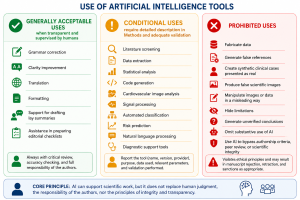
Figure 1 – Diagram of the Possible Uses of AI in ABC Imagem Cardiovascular.
7. Scientific references, plagiarism, and copyright
AI tools may assist in the initial search for literature but must not be cited as a primary source of scientific evidence. All references suggested by AI must be manually verified in reliable sources such as PubMed, Crossref, SciELO, Web of Science, Scopus, or official journal websites.
Invented, inaccurate, or unverifiable references may constitute serious violations of publication ethics and may result in sanctions against researchers, as established by CNPq Ordinance No. 2664/2026 of March 6, 2026 (Policy on Integrity in Scientific Activity). The use of AI does not diminish the authors’ responsibility for originality, proper citation, permissions, copyright compliance, the absence of plagiarism, and the avoidance of redundant publication.
8. Patient privacy and data protection
Authors, reviewers, editors, and editorial staff must not enter identifiable or potentially identifiable patient information into public or unsecured AI tools. This includes clinical histories, patient photographs, ECGs, radiographs, echocardiograms, angiograms, computed tomography (CT) scans, magnetic resonance imaging (MRI) scans, PET, SPECT, laboratory test results, genetic data, and detailed clinical descriptions.
Any use of AI involving individual-level data must comply with ethical approval requirements, informed consent when applicable, institutional policies, anonymization standards, and relevant data protection legislation, including Brazil’s General Data Protection Law (LGPD – Lei Geral de Proteção de Dados).
9. Images, figures, and graphical material
AI tools must not be used to alter scientific or clinical images in ways that modify their meaning, interpretation, diagnostic value, or evidentiary content. This rule applies to all forms of medical imaging, including patient photographs, imaging studies such as echocardiography, angiography, computed tomography (CT), magnetic resonance imaging (MRI), PET, SPECT, pathology images, ECG tracings, electrophysiological maps, and any other scientific visual data.
Illustrative figures, schematic images, or graphical abstracts generated with AI assistance may be considered for publication provided that their AI-generated nature is clearly disclosed, they are accurate, non-misleading, free of copyright infringements, and are not presented as original clinical or experimental data. The authors assume full responsibility for the authorship of the material.
10. AI as part of research methods
When AI is used as part of the scientific methodology, rather than solely as a writing tool, authors must report the following: the name and version of the model; the type of tool; training, validation, and test datasets, when applicable; preprocessing procedures; input variables; performance metrics; calibration methods; internal and external validation; handling of missing data; bias assessment; the degree of human oversight; availability of the code or model, when possible; and the regulatory status of the tool, where applicable.
Manuscripts involving the development, validation, or clinical evaluation of AI tools should follow international reporting guidelines appropriate to the study design, such as CONSORT-AI for clinical trials, SPIRIT-AI for clinical trial protocols, TRIPOD+AI for diagnostic or prognostic prediction models, CLAIM for AI in medical imaging, STARD-AI for diagnostic accuracy studies, and DECIDE-AI for early-stage clinical evaluations of AI-based decision-support systems.
11. Bias, fairness, and generalizability
Studies involving AI in cardiology should discuss the risks of bias and the potential for generalizability. Whenever relevant and ethically permissible, authors should consider performance across sex, age, race/color/ethnicity, socioeconomic context, geographic region, equipment type, acquisition protocol, disease prevalence, and applicability to Brazilian and Latin American populations.
AI models should be evaluated for external validity and the risk of unequal performance across clinically relevant subgroups.
12. Rules for reviewers
Submitted manuscripts, figures, tables, supplementary materials, reviewer reports, and editorial correspondence are confidential documents. Under no circumstances should reviewers upload unpublished manuscripts or peer-review materials to public or external AI tools.
Peer review is a specialized human responsibility. Reviewers must not delegate the independent preparation of a review report to AI. Limited use of AI to improve the clarity or grammar of a reviewer’s own comments may be acceptable only if no confidential manuscript content is entered into the tool and the reviewer remains fully responsible for the review report.
Any substantive use of AI during the peer-review process must be disclosed to the editor.
13. Rules for Editors and Editorial Staff
Editors and editorial staff must preserve confidentiality and must not, under any circumstances, enter unpublished manuscripts, peer-review materials, or editorial correspondence into public AI tools.
AI tools may support editorial workflows only when confidentiality, data protection, and editorial independence are maintained. They may assist with administrative checks, language editing, compliance with reporting guidelines, statistical screening, reference verification, preparation of post-publication summaries, or science communication content, provided that all outputs are reviewed by qualified human professionals.
Final editorial decisions must always be made by human editors. AI must not be used as the sole basis for manuscript acceptance, rejection, reviewer selection, ethical judgment, or the determination of research misconduct.
14. AI-generated text detection tools
AI-generated text detection tools are prone to both false positives and false negatives, potentially leading to the unfair penalization of non-native English-speaking authors or manuscripts that have undergone translation and language editing. Therefore, AI detectors should be used only as auxiliary screening tools and never as sole evidence for manuscript rejection, allegations of misconduct, or editorial sanctions.
Suspected cases should be evaluated through appropriate editorial procedures, including requests for clarification from the authors and processes consistent with established publication ethics recommendations.
15. Hidden prompts and manipulation of the editorial process
Manuscripts must not contain hidden text, disguised commands, invisible prompts, white-font text, metadata instructions, or any other content intended to manipulate AI tools, reviewers, editors, editorial management systems, indexing services, or the peer-review process.
Such conduct may be considered an attempt to manipulate the editorial process and may be treated as potential publication misconduct.
16. Actions regarding inappropriate AI use
Undisclosed, misleading, or unethical use of AI may result in requests for clarification, manuscript correction, rejection, retraction, an expression of concern, or institutional notification, depending on the severity of the issue and in accordance with the journal’s publication ethics procedures.
The assessment should take into account the intent, extent of the problem, scientific impact, risk to patients, breach of confidentiality, data fabrication, image manipulation, false references, and recurrence of the misconduct.
17. Policy Updates
As AI technologies and scientific publishing standards evolve rapidly, this policy should be reviewed periodically by the Editorial Board of ABC Imagem Cardiovascular, preferably at least once a year or whenever relevant new international recommendations are published.
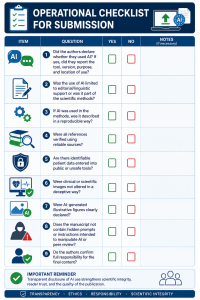
Operational Submission Checklist
References and Supporting Documents
1. International Committee of Medical Journal Editors. Recommendations for the Conduct, Reporting, Editing, and Publication of Scholarly Work in Medical Journals. Section V: Use of Artificial Intelligence in Publishing. ICMJE; 2023.
2. International Committee of Medical Journal Editors. Use of AI by Authors; Use of AI by Reviewers; Editors’ Role in Ensuring Responsible Use of AI. ICMJE; 2023.
3. Committee on Publication Ethics. Authorship and AI tools: COPE position statement [Internet]. COPE; 2023 [cited 2026]. Available from: https://publicationethics.org/node/111341
4. Zielinski C, Winker MA, Aggarwal R, et al. Chatbots, generative AI, and scholarly manuscripts: WAME recommendations. Med J Armed Forces India. 2024;80(1):1-4. doi:10.1016/j.mjafi.2023.12.003
5. Flanagin A, Bibbins-Domingo K, Berkwits M, Christiansen SL. Nonhuman “Authors” and Implications for the Integrity of Scientific Publication and Medical Knowledge. JAMA. 2023;329(8):637-639. doi:10.1001/jama.2023.1344
6. BMJ. AI use policy [Internet]. London: BMJ; [year of publication/update] [cited 2026]. Available from: https://www.merriam-webster.com/dictionary/link
7. Nature Portfolio. Artificial Intelligence: editorial policies [Internet]. London: Springer Nature; [year of publication/update] [cited 2026]. Available from: https://www.merriam-webster.com/dictionary/link
8. Elsevier. Generative AI policies for journals [Internet]. Amsterdam: Elsevier; [year of publication/update] [cited 2026]. Available from: https://www.merriam-webster.com/dictionary/link
9. Jackson J, Landis G, Baskin PK, Hadsell KA, English M. CSE Guidance on Machine Learning and Artificial Intelligence Tools. Science Editor. 2023;46:72.
10. Liu X, Rivera SC, Moher D, Calvert MJ, Denniston AK; SPIRIT-AI and CONSORT-AI Working Group. Reporting guidelines for clinical trial reports for interventions involving artificial intelligence: the CONSORT-AI extension. BMJ. 2020;370:m3164. doi:10.1136/bmj.m3164
11. Rivera SC, Liu X, Chan AW, Denniston AK, Calvert MJ; SPIRIT-AI and CONSORT-AI Working Group. Guidelines for clinical trial protocols for interventions involving artificial intelligence: the SPIRIT-AI extension. BMJ. 2020;370:m3210. doi:10.1136/bmj.m3210
12. Collins GS, Moons KGM, Dhiman P, et al. TRIPOD+AI statement: updated guidance for reporting clinical prediction models that use regression or machine learning methods. BMJ. 2024;385:e078378. doi:10.1136/bmj.e078378
13. Mongan J, Moy L, Kahn CE Jr. Checklist for Artificial Intelligence in Medical Imaging: A Guide for Authors and Reviewers. Radiology: Artificial Intelligence. 2020;2(2):e200029. doi:10.1148/ryai.2020200029
14. Tejani AS, Klontzas ME, Gatti AA, et al. Checklist for Artificial Intelligence in Medical Imaging: CLAIM 2024 Update. Radiology: Artificial Intelligence. 2024;6(4):e240300. doi:10.1148/ryai.240300
15. Vasey B, Nagendran M, Campbell B, et al. Reporting guideline for the early-stage clinical evaluation of decision support systems driven by artificial intelligence: DECIDE-AI. Nat Med. 2022;28(5):924-933. doi:10.1038/s41591-022-01772-2
16. Sounderajah V, et al. STARD-AI reporting guideline for diagnostic accuracy studies using artificial intelligence. BMJ. 2025;388:e080123. doi:10.1136/bmj.e080123
Note: ChatGPT 5.0 was used to improve the fluency of the text, format the references, and create the figures and diagrams. The authors assume full responsibility for the content.