ABC Imagem Cardiovasc. 2026; 39(3): e20260079
Left Atrial Strain Assessment in Hereditary Amyloidosis: A Systematic Review

DOI: 10.36660/abcimg.20260079i
This Original Article is referred by the Short Editorial "The Extracellular Matrix Speaks. But Are We Truly Listening? Left Atrial Strain, Hereditary Transthyretin Amyloidosis, and Some Reflections".
Abstract
Background:
Hereditary transthyretin amyloidosis (ATTRv) is a genetic disorder caused by extracellular deposition of amyloid fibrils derived from plasma transthyretin in tissues following loss of its tetrameric structure, affecting the heart and nervous system.
Objective:
This study aimed to assess left atrial function in ATTRv and to discuss its relevance as a tool for early detection of cardiac involvement, as well as its prognostic value.
Methods:
This systematic literature review was conducted in accordance with PRISMA guidelines and registered in PROSPERO (CRD42051116316). The following databases were searched: Embase, PubMed, Scopus, and LILACS, including studies published between January 2010 and August 2025. MeSH terms used included “cardiac amyloidosis,” “transthyretin amyloidosis,” “ATTR,” “echocardiography,” “strain,” and “left atrium.”
Results:
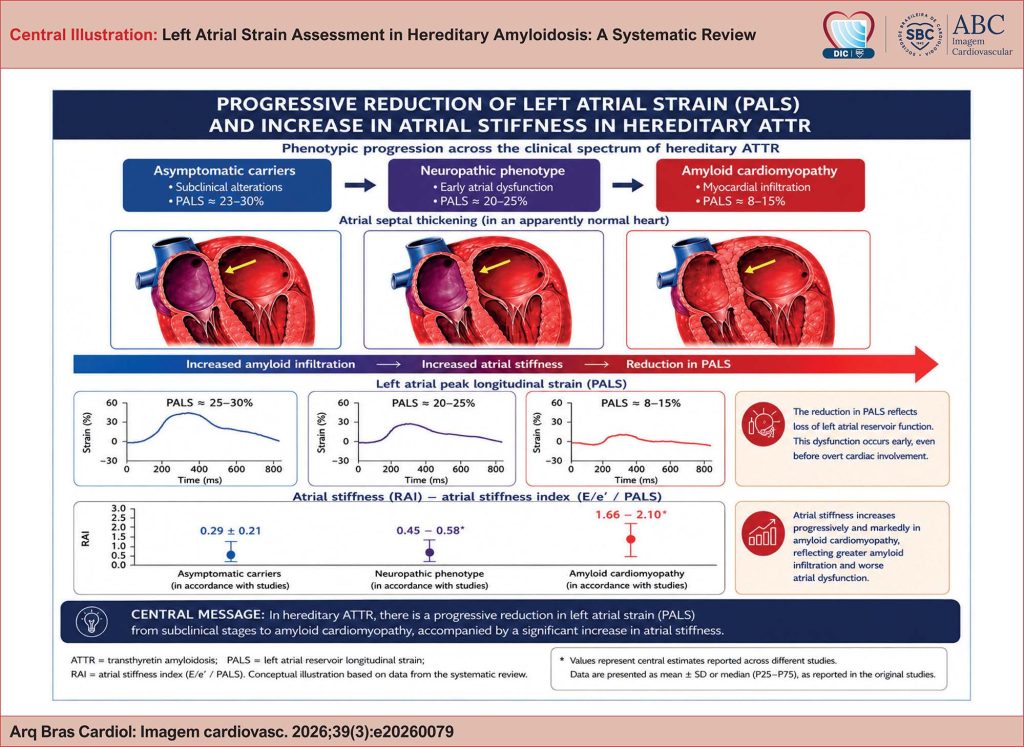
Nine studies were included, comprising a total of 1,290 patients with amyloidosis. Assessment of left atrial function demonstrated a progressive reduction in left atrial strain, particularly reservoir strain, measured by peak atrial longitudinal strain (PALS), across the clinical spectrum of ATTRv, as follows: unaffected carriers (PALS 23%–30%), neuropathic phenotype (PALS 20%–25%), and amyloid cardiomyopathy (PALS 8%–15%).
Conclusion:
This systematic review demonstrates that left atrial strain dysfunction is a consistent finding in patients with ATTRv, including carriers and individuals with isolated polyneuropathy. Reduced PALS and increased atrial stiffness emerge as promising parameters for early detection of cardiac involvement, with potential prognostic value. These findings should be interpreted with caution due to the observational design of the included studies. Further studies with larger sample sizes are needed.
5