ABC Imagem Cardiovasc. 2026; 39(3): e20260075
My Approach To: Bow Hunter’s Syndrome
DOI: 10.36660/abcimg.20260075i
Abstract
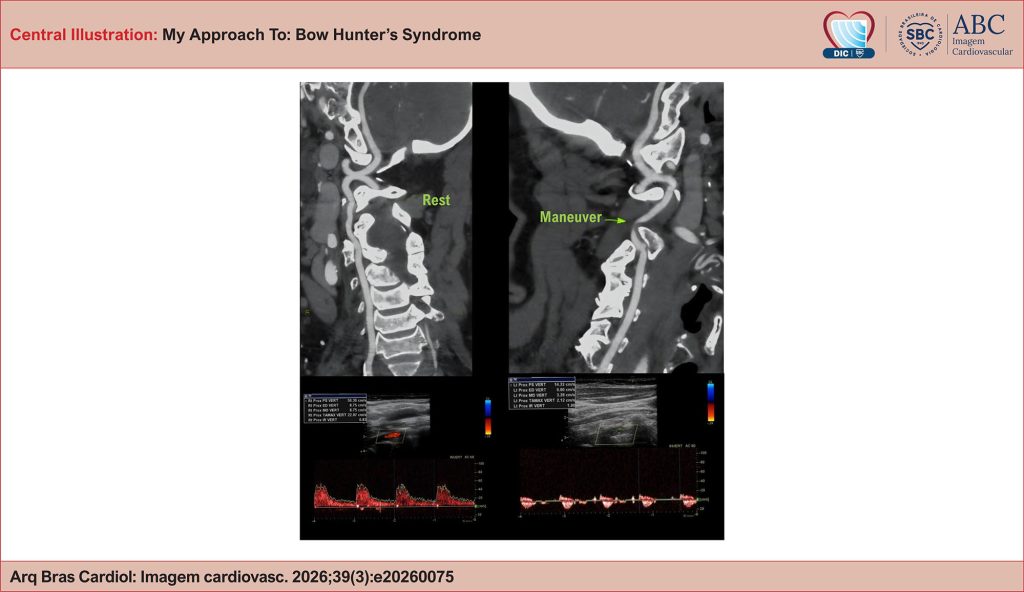
Bow hunter’s syndrome (BHS) is a rare and underdiagnosed condition characterized by mechanical compression or temporary occlusion of the vertebral artery due to lateral rotation or hyperextension of the neck. This mechanical stress occurs predominantly in the V3 segment (C1–C2 level) because of its high degree of mobility.
The pathophysiology involves two main mechanisms – hemodynamic, in which extreme rotation immediately reduces local blood flow and causes paroxysmal symptoms (the triad of vertigo, dizziness, and imbalance) that resolve once the head returns to the neutral position; and thromboembolic, triggered by repeated microtrauma and chronic endothelial injury, which may lead to thrombus formation or dissections and result in cerebellar or brainstem infarctions.
Definitive diagnosis is based on dynamic digital subtraction angiography (DSA) and computed tomography angiography (CTA). However, dynamic vascular Doppler serves as an excellent non-invasive screening method, capable of recording critical real-time hemodynamic changes through positional maneuvers, such as a greater than 50% drop in peak systolic velocity (PSV) or disappearance of diastolic flow.
Therapeutic management varies according to severity. Mild cases are treated conservatively with a cervical collar, behavioral modifications, and antiplatelet therapy. Surgical interventions – such as decompression via osteophytectomy or cervical arthrodesis – and specific endovascular treatments are strictly reserved for patients with refractory symptoms or high risk of stroke.
Keywords: Diagnosis; Rare diseases; Vertebral Artery
223