ABC Imagem Cardiovasc. 2026; 39(3): e20260077i
Multimodal Evaluation of Cardiac Myosin Inhibitor Response in Obstructive Hypertrophic Cardiomyopathy Using Echocardiography and Cardiopulmonary Exercise Testing: A Meta-Analysis A Meta-Analysis

Abstract
Background:
Cardiac Myosin Inhibitors (CMIs), including mavacamten and aficamten, represent a novel class of targeted therapies for obstructive Hypertrophic Cardiomyopathy (oHCM). Their effects on echocardiographic parameters and cardiopulmonary performance across Randomized Controlled Trials (RCTs) have not yet been systematically synthesized.
Objectives:
To conduct a systematic review and meta-analysis of RCTs in accordance with the PRISMA guidelines.
Methods:
Primary echocardiographic outcomes included Left Ventricular Ejection Fraction (LVEF), Left Ventricular Mass Index (LVMI), Interventricular Septal Thickness (IVST), E/e’ septal ratio, and resting, Valsalva, and post-exercise Left Ventricular Outflow Tract gradients (LVOT-G). Cardiopulmonary Exercise Testing (CPET) outcomes were also assessed. Data were pooled using random-effects models and reported as Mean Differences (MDs) or Standardized Mean Differences (SMDs), with 95% Confidence Intervals (CIs).
Results:
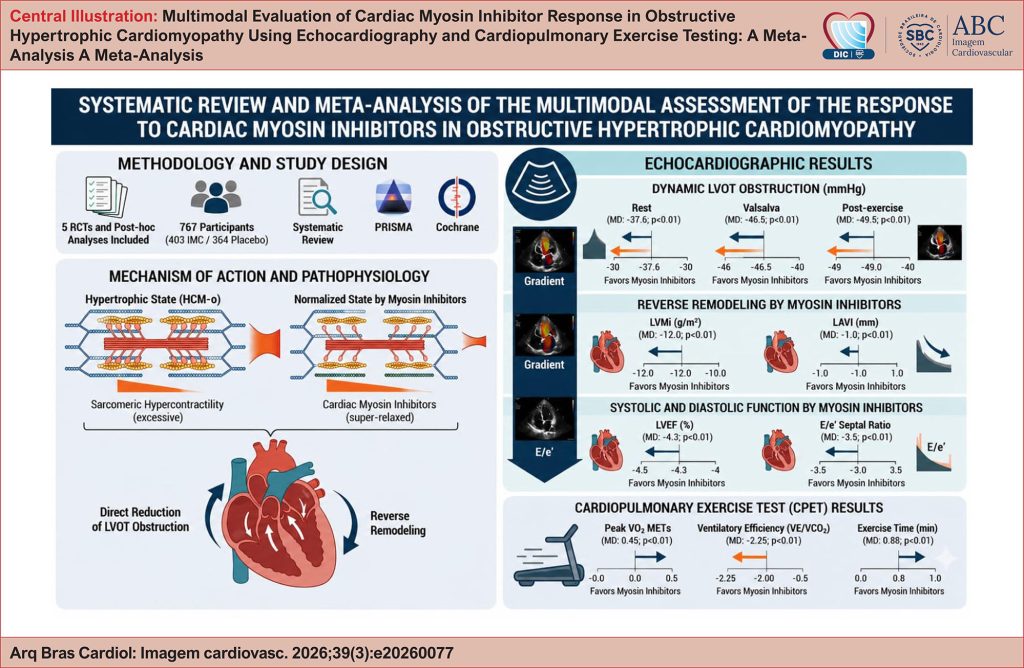
Five RCTs comprising 767 participants were included. CMIs significantly reduced resting LVOT-G (MD: −37.59 mmHg), Valsalva gradients (MD: −46.45 mmHg), and post-exercise gradients (MD: −49.45 mmHg; all p < 0.01). Reverse cardiac remodeling was reflected by reductions in LVMI (MD: −11.96 g/m²), IVST (SMD: −0.98), and E/e’ septal ratio (MD: −3.53), along with an expected modest reduction in LVEF (MD: −4.33%). CPET outcomes also improved significantly, including ventilatory efficiency (MD: −2.25), peak metabolic equivalents (METs) (MD: +0.45), peak circulatory power (MD: +482.78 mL/kg/min × mmHg), and exercise duration (MD: +0.88 min; all p < 0.01). Subgroup analyses revealed no significant differences between the agents.
Conclusion:
CMIs promote reverse cardiac remodeling, improve hemodynamics, and enhance exercise tolerance in patients with oHCM, supporting their role as disease-modifying targeted therapies.
Keywords: Echocardiography; Hypertrophic Cardiomyopathy; Meta-Analysis
227