ABC Imagem Cardiovasc. 2026; 39(3): e20260089
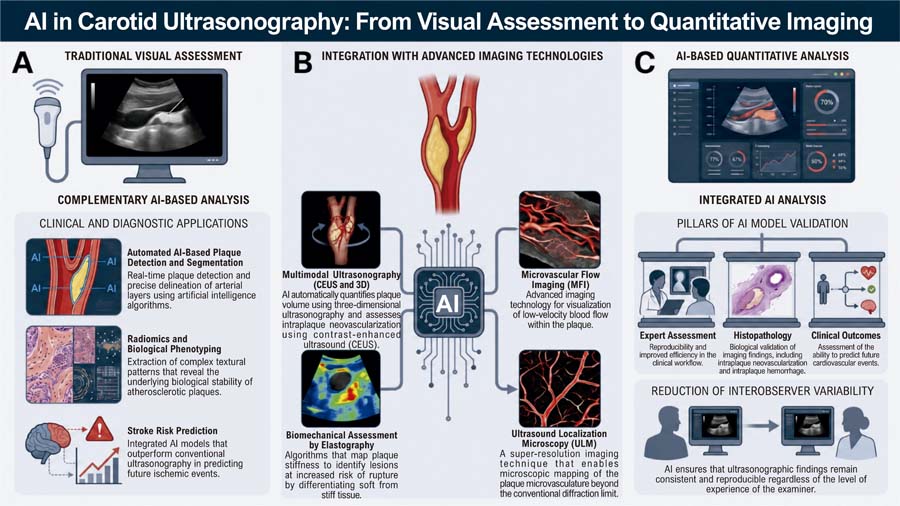
Artificial Intelligence in Carotid Ultrasonography: Current Status and Future Directions

DOI: 10.36660/abcimg.20260089i
Introduction
Carotid atherosclerosis is an important marker of cardiovascular and cerebrovascular risk and has traditionally been assessed using ultrasonography with a predominant focus on the degree of luminal stenosis. This paradigm was established by landmark studies that supported therapeutic decision-making, particularly in symptomatic patients. However, advances in understanding of plaque biology have shown that stenosis alone does not fully account for the clinical risk, especially in asymptomatic individuals or those with non-obstructive lesions.
Over the past decades, increasing evidence has demonstrated that the presence of plaque, its atherosclerotic burden, and morphological and compositional characteristics provide relevant prognostic information beyond that offered by traditional clinical risk scores. In contemporary cohorts, even small carotid plaques (including those associated with stenosis of less than 50%) have been associated with a progressive increase in the risk of atherosclerotic events, mainly when bilateral or accompanied by femoral artery involvement, reinforcing the concept of systemic and multivascular subclinical atherosclerosis. In primary prevention, the quantification of plaque burden has shown greater predictive value than carotid intima-media thickness alone and has influenced clinical decision-making, including intensification of statin therapy. These findings support the transition from a model focused exclusively on hemodynamics to a more comprehensive approach centered on plaque characterization and individualized risk stratification.
[…]
10