ABC Imagem Cardiovasc. 2026; 39(2): e20260034
My Approach to a Standardized Assessment of the Tricuspid Valve: A Contemporary Analysis

DOI: 10.36660/abcimg.20260034i
Abstract
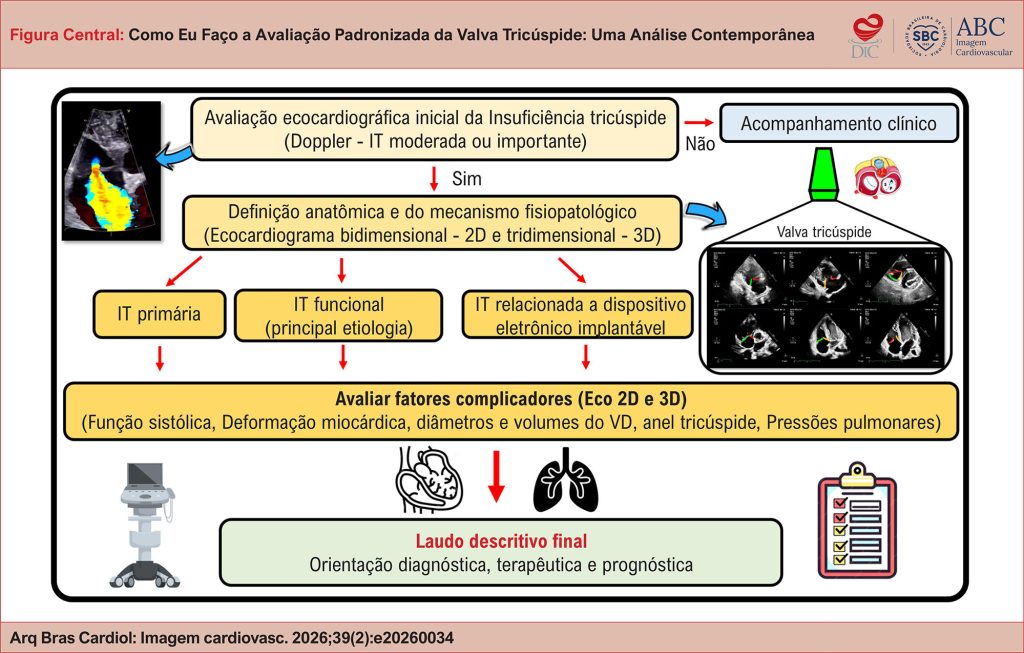
Tricuspid regurgitation (TR) remains one of the most frequent valvular diseases encountered in echocardiographic practice. Mild cases generally do not require further investigation or specific treatment. Moderate and severe valvular disease, however, require more detailed anatomical and etiological assessment to better understand the underlying pathophysiological mechanism.
Two-dimensional echocardiographic analysis is the initial examination of choice and should be performed in a standardized manner, with individual identification of the leaflets using the main transthoracic echocardiographic windows. The description of complementary parameters – such as right ventricular (RV) systolic function, myocardial deformation assessed by longitudinal strain, right-sided chamber diameters and volumes, and estimation of pulmonary pressures – guides the clinician regarding potential therapeutic strategies and provides relevant prognostic information.
In this context, the 2025 European Society of Cardiology (ESC) guideline reinforces the importance of a standardized and comprehensive evaluation of the tricuspid valve and its hemodynamic repercussions. Most of this assessment can be performed using widely available two-dimensional transthoracic echocardiography.
823