ABC Imagem Cardiovasc. 2026; 39(1): e20260013
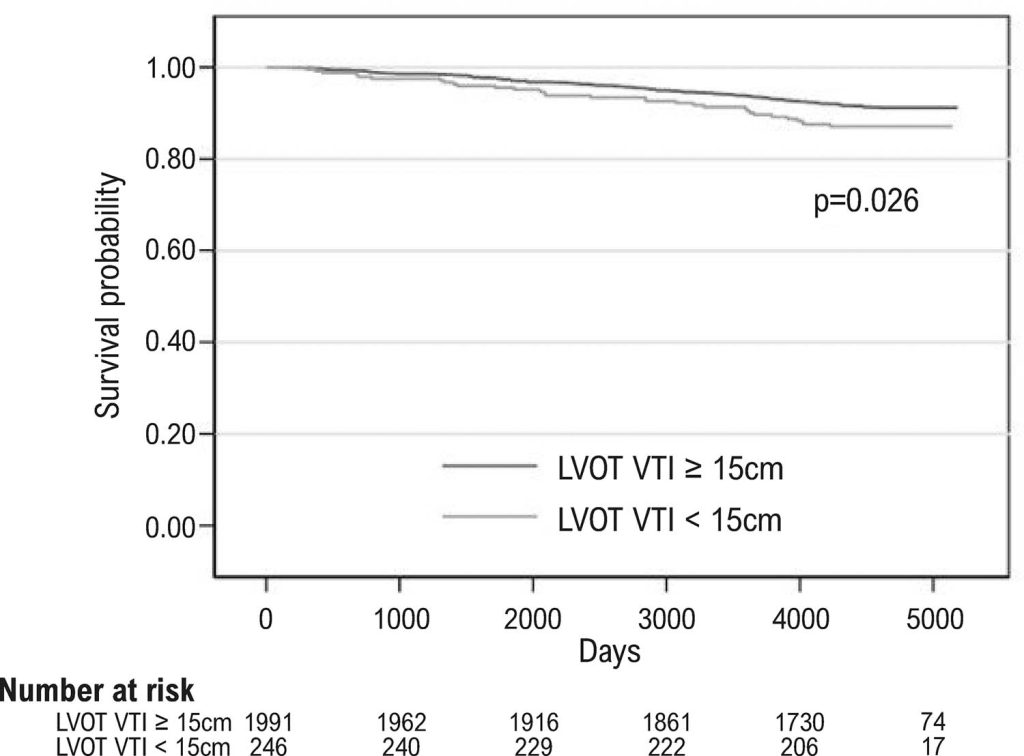
Left Ventricular Outflow Tract Velocity-Time Integral (LVOT VTI) as a Marker of Cardiac Performance: Mortality Data of the ELSA-Brasil Cohort

DOI: 10.36660/abcimg.20260013i
Transthoracic Echocardiography (TTE) is a well-established tool for assessing cardiac function and hemodynamics. While Left Ventricular (LV) systolic and diastolic function are commonly used metrics, Cardiac Output (CO) remains central for evaluating hemodynamic status, especially in critical care settings. TTE-derived parameters, such as Left Ventricular Outflow Tract Velocity-Time Integral (LVOT VTI) and LVOT area, when combined with body habitus and heart rate, provide noninvasive estimates of cardiac output. However, the accuracy of CO calculations may decrease when multiple covariates are included, with LVOT diameter being a major source of error. In contrast, isolated LVOT VTI may represent a simpler and more reliable surrogate of cardiac performance.
Among patients with Heart Failure with reduced Ejection Fraction (HFrEF), LVOT VTI values below 12 cm or 8 cm have been associated with worse cardiovascular outcomes, with a progressive increase in risk as VTI decreases., Similarly, in intermediate to high-risk pulmonary embolism, LVOT VTI ≤ 15 cm has been associated with higher in-hospital mortality, cardiopulmonary arrest, shock, and need for reperfusion therapy. In secondary mitral regurgitation, LVOT VTI ≤ 17 cm predicts both cardiovascular and all-cause mortality. And in ambulatory adults with stable Coronary Artery Disease (CAD), LVOT VTI ≤ 18 cm was associated with heart failure hospitalization and mortality. Despite these findings, there is limited data to evaluate the usefulness of LVOT VTI in free-dwelling adults.
[…]
Keywords: Echocardiography; Healthy Volunteers; Mortality; Risk Assessment
67