Arq Bras Cardiol: Imagem cardiovasc. 2023; 36(2): e20230008
Comparative Analysis of Myocardial Work After Decongestion Therapy in a Patient With Acutely Decompensated HFrEF

DOI: 10.36660/abcimg.20230008i
Introduction
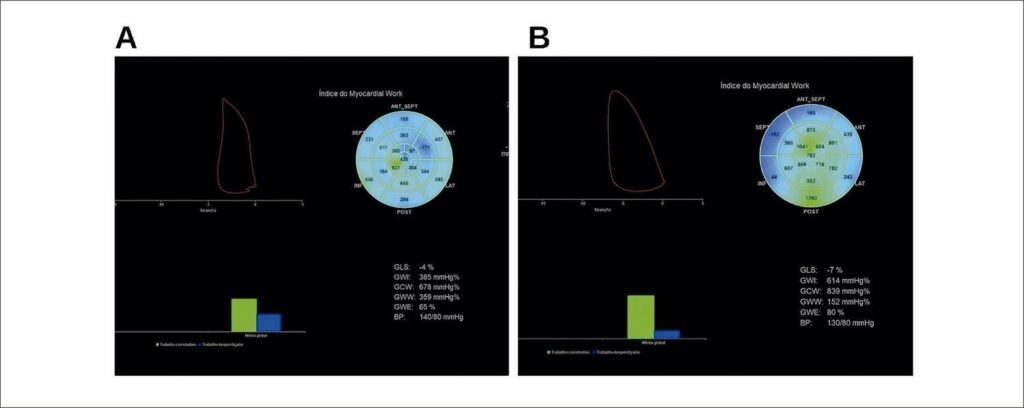
Acutely decompensated reduced ejection fraction heart failure (HFrEF) is one of the leading causes of hospitalization in our setting, with a 90-day readmission rate of 50%. The use of additional tools in the assessment of the left ventricular function, such as the measurement of myocardial deformation through the Global Longitudinal Strain of the left ventricle (GLS) has greater prognostic value than the evaluation of the left ventricular ejection fraction (LVEF) by the Simpson method. Despite the analysis of the myocardial deformity through the GLS being considered an independent predictor of mortality in patients with HFrEF, it is a parameter that experiences changes in pre- and after-load and, therefore, has limitations regarding the assessment of ventricular performance.– Myocardial work (MW) has stood out in recent years as a complementary tool to access parameters of myocardial function from the GLS-derived analysis, with the benefit of incorporating afterload information through the interpretation of the dynamic curve of deformity due to non-invasive left ventricular (LV) filling pressure. Hence, the analysis of MW has been encouraging in patients with HFrHF, and, when analyzed in combination with classic hemodynamic parameters, it can add information with greater accuracy and prognostic value in the cardiac decompensation scenario.–
[…]
656