ABC Imagem Cardiovasc. 2025; 38(4): e20250098
Infective Endocarditis in Brazil: A Narrative Review and Critical Analysis of Population and Hospital Case Data

DOI: 10.36660/abcimg.20250098i
Abstract
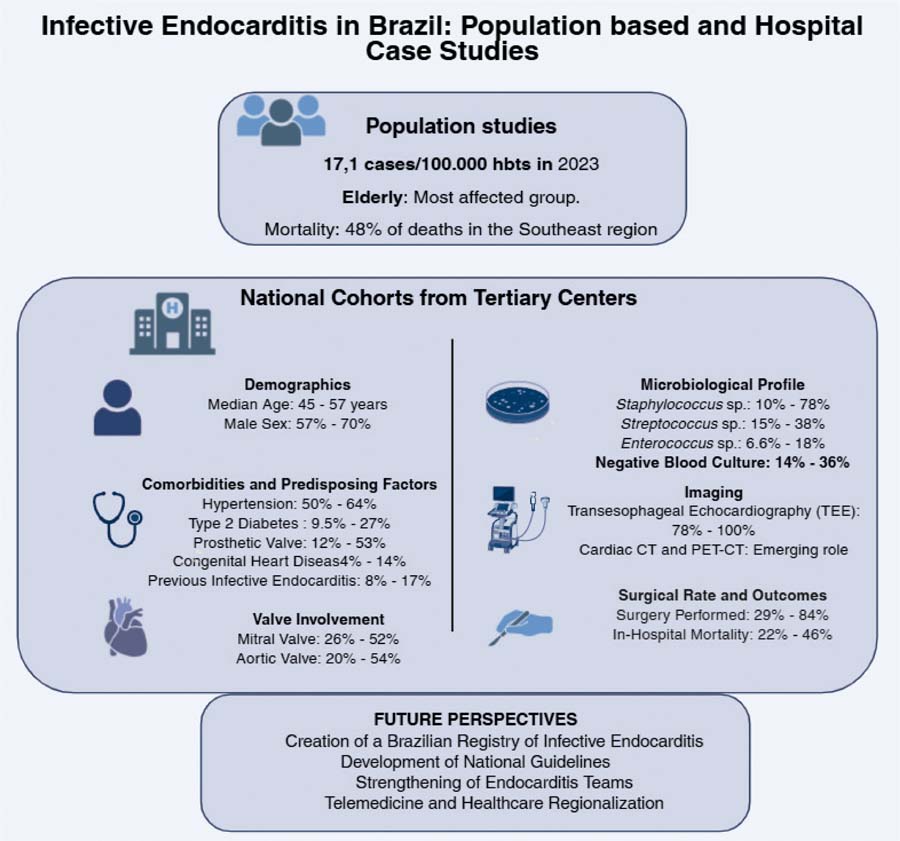
Infective endocarditis remains a serious condition with high morbidity and mortality rates despite advances in diagnostic and therapy. While the Global North has seen a shift toward older patients with prosthetic valve infections, Brazil’s understanding of the disease is hindered by reliance on fragmented, hospital-based data, primarily from the Southeast region. This narrative review synthesizes recent evidence to outline the national panorama. Population studies indicate an increase in incidence and mortality, primarily affecting men and the elderly, but with marked regional heterogeneity. Analyses of hospital case series reveal an epidemiological profile characterized by patients younger than international averages, with a high prevalence of comorbidities, underlying structural heart disease, and prosthetic valves. The microbiological landscape is diverse, with no consistent predominance between staphylococci and streptococci. Nevertheless, a particularly concerning finding is the high incidence of negative blood cultures. Severe complications are frequent, and variability exists in surgical intervention rates and in-hospital mortallity across studies. In light of this scenario, the authors propose a set of strategic actions to guide future advances: the creation of a Brazilian Registry of Infective Endocarditis, the development of Contextualized National Guidelines, the strengthening of multidisciplinary teams (Endocarditis Teams), and the implementation of measures with the potential to reduce regional disparities, such as telemedicine and the regionalization of care. The consolidation of these initiatives has the potential to transform the current landscape by enhancing epidemiological knowledge, standardizing care practices, and ultimately improving clinical outcomes nationwide.
85