ABC Imagem Cardiovasc. 2025; 38(4): e20250066
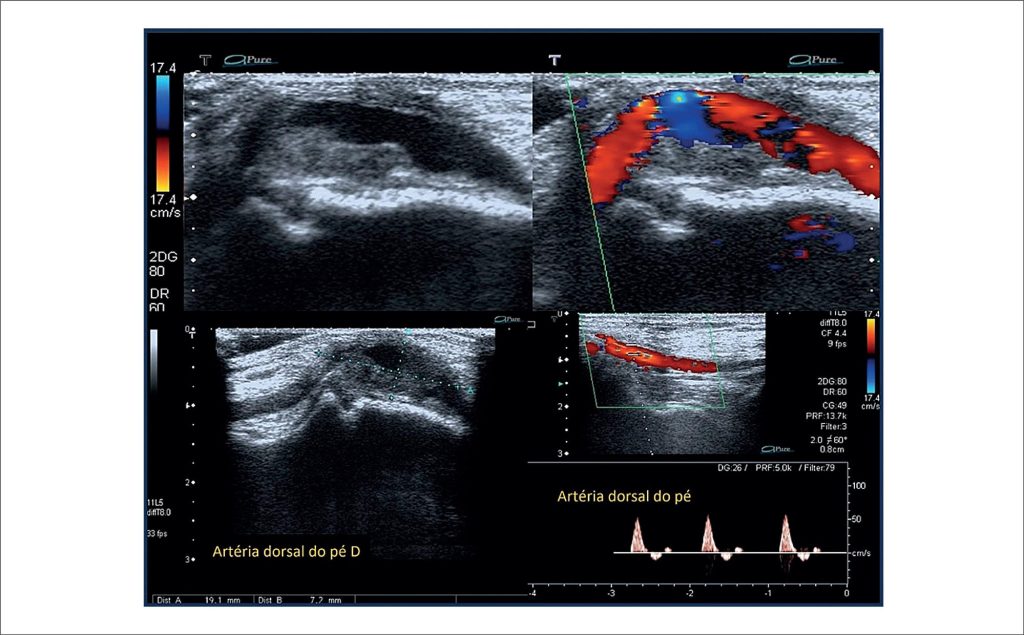
Dorsalis Pedis Artery Aneurysm: an Ultrasound Diagnosis

DOI: 10.36660/abcimg.20250066i
Discussion
The DPAA (pedal artery) was first described in 1907. Since then, other authors have reported this rare type of aneurysm, but its clinical manifestations are still relatively unknown. With only 24 cases reported in the literature until 2017, according to Aragão et al., the DPAA aneurysm is more common among men (63%) with a mean age of 55.4%. In general, it appears as a pulsatile mass, which may lead to microembolization, hemorrhage, rupture, and nerve compression. Physical examination usually reveals a pulsatile mass that can cause pain, paresthesia, and discomfort when walking or wearing shoes, complaints similar to the case reported in our study.
The pathophysiology of these aneurysms is still uncertain, but it appears to be related to two types of mechanisms: an intrinsic mechanism, related to weakness in the vessel wall structure, such as collagen diseases, Marfan and Ehlers-Danlos syndromes, syphilis, diabetes, infections, trauma, atherosclerosis, and fibrodysplasia; and an extrinsic mechanism, caused by mechanical stress on the arterial wall, such as trauma.– However, according to the literature, many DPAAs are pseudoaneurysms and occur after trauma or iatrogenic injuries secondary to orthopedic or vascular procedures. Although trauma is a cause of DPAAs, patients are often unable to remember the acute event, and symptoms arise when they experience a compression of local structures or specific events, including embolism or rupture. There have also been cases of repeated, low-impact trauma that have led to aneurysmal degeneration, such as tight shoes in patients with congenitally markedly high arches.
[…]
103