ABC Imagem Cardiovasc. 2026; 39(2): e20260049
Anabolic-Androgenic Steroids and Acute Myocardial Infarction in Young Adults: A Literature Review Based on a Case Series

DOI: 10.36660/abcimg.20260049i
This Original Article is referred by the Short Editorial "A New Frontier in Cardiovascular Prevention: Beyond Prohibition, Clinical Management of Anabolic Steroid Users".
Abstract
Background:
The use of anabolic-androgenic steroids (AAS) has increased substantially, especially among young adults seeking aesthetic enhancement and improved physical performance. Scientific evidence demonstrates a significant association between the abuse of these substances and severe cardiovascular events, including acute myocardial infarction (AMI), often occurring in individuals without traditional cardiovascular risk factors.
Objective:
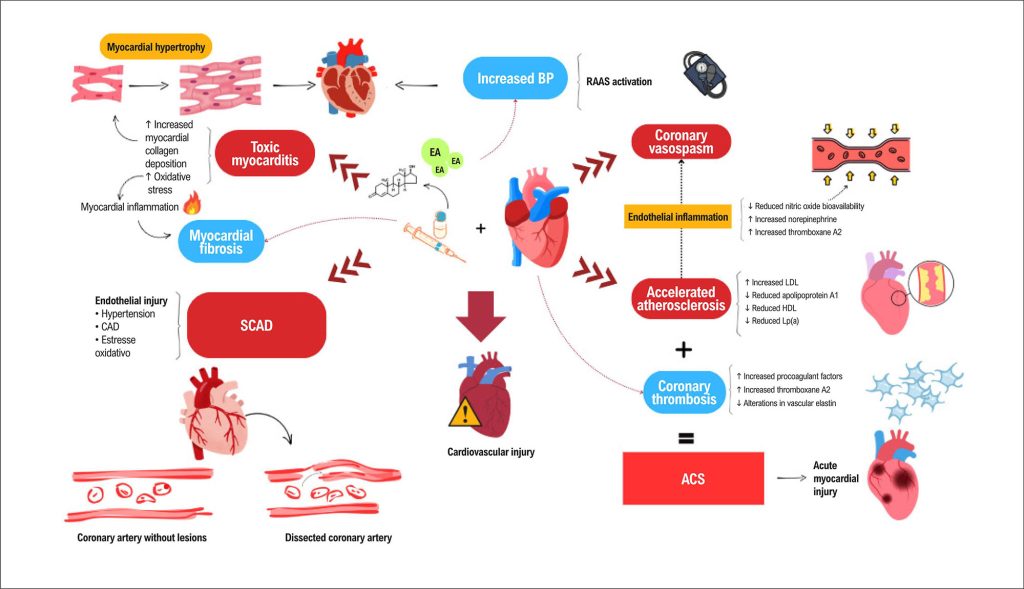
To describe the adverse effects of AAS on the cardiovascular system and the main pathophysiological mechanisms involved in the development of AMI through the analysis of a clinical case series combined with a review of medical literature.
Methods:
A systematic literature review was conducted using the PubMed and SciELO databases, complemented by the analysis of three clinical cases. Demographic variables and characteristics related to AAS use, including duration of exposure and route of administration, were evaluated, with emphasis on the pathophysiological mechanisms associated with AMI.
Results:
Analysis of the clinical cases identified different mechanisms related to AMI, including coronary thrombosis, atherosclerosis with plaque rupture, and spontaneous coronary artery dissection. The literature review also identified other relevant mechanisms, such as coronary vasospasm and toxic myocarditis. A predominance of male patients was observed, with the highest incidence occurring among individuals aged 20-40 years, and testosterone esters were the most frequently used AAS.
Conclusions:
AAS abuse represents a major threat to cardiovascular health and is associated with AMI through multiple pathophysiological mechanisms. These findings reinforce the need for public awareness as well as the development of preventive strategies and clinical guidelines aimed at managing this emerging condition.
1,067