ABC Imagem Cardiovasc. 2026; 39(2): e20260054
Recognition of Clinical Stages and Myocardial Damage in Aortic Stenosis: Beyond Diagnosis – To Op or Not To Op

DOI: 10.36660/abcimg.20260054i
Abstract
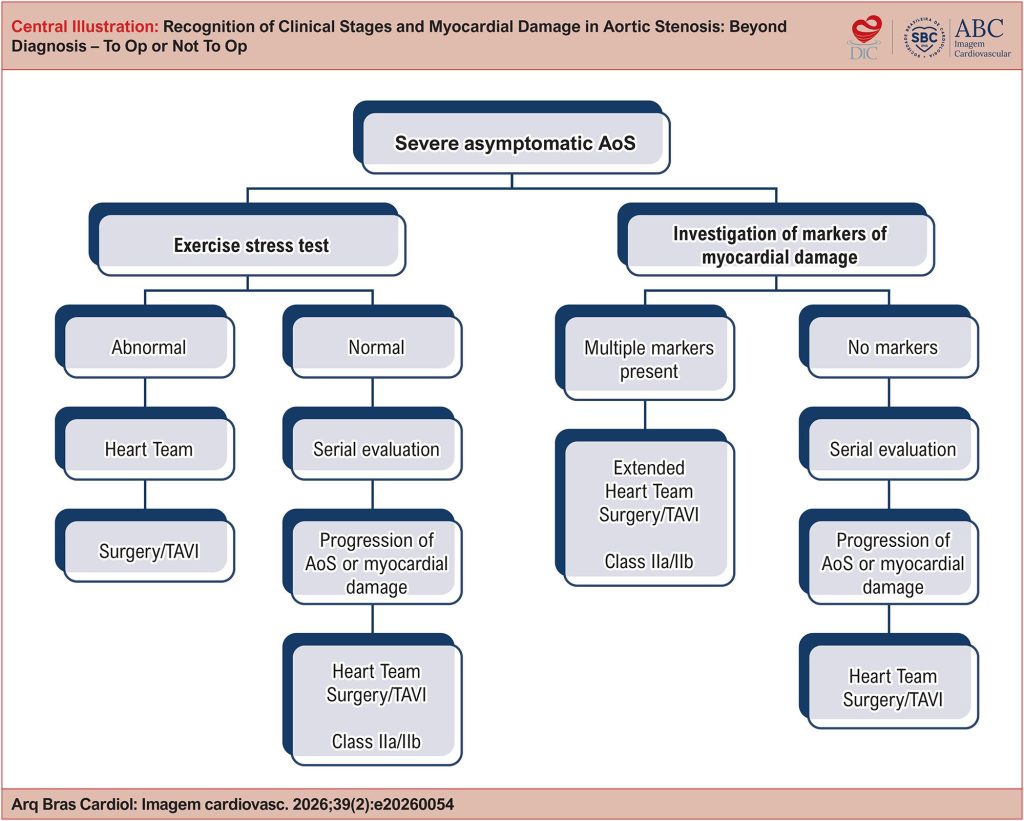
Severe aortic stenosis is a progressive clinical entity that has historically developed alongside descriptions of pathological anatomy, cardiovascular semiology, heart surgery, and percutaneous cardiovascular interventions. Indication for valve replacement in patients with severe aortic stenosis is still based on symptom onset. With advances in surgical techniques, especially transcatheter implantation, the focus has shifted to identifying early markers of myocardial damage that may indicate irreversible myocardial injury. This review article seeks to provide a comprehensive analysis of methods for identifying myocardial damage in patients with severe aortic stenosis, including clinical evaluation, electrocardiography (ECG), echocardiography, cardiac magnetic resonance imaging (CMR), and plasma biomarkers. It also discusses the staging of myocardial damage and the optimal timing for therapeutic intervention based on clinical, functional, and structural findings. Recent studies designed to address how to manage asymptomatic patients with aortic stenosis have yielded divergent results. Accordingly, the aim is to assist clinicians in deciding the optimal timing for valve replacement, taking individual patient characteristics into account.
294