Arq Bras Cardiol: Imagem cardiovasc. 2025; 38(1): e20240115
Permissive Cardiotoxicity: When the Optimal Is the Enemy of the Good

DOI: 10.36660/abcimg.20240115i
Abstract
Cancer and cardiovascular diseases are the leading causes of mortality worldwide. As these diseases share common metabolic pathways, patients with cancer are currently seen as having subclinical alterations with great potential for developing cardiovascular diseases (and vice versa). This tenuous interrelationship has led to the emergence of cardio-oncology (CO) as an area of study and discussion, with a major impact on the management of these cases.
In clinical practice, CO is dominated by the dilemma of how to best manage cardiovascular toxicity during cancer treatment. The management of these cases focuses not only on restoring cardiovascular balance, but also on ensuring that the best oncological treatment will be offered, without suspensions or interruptions.
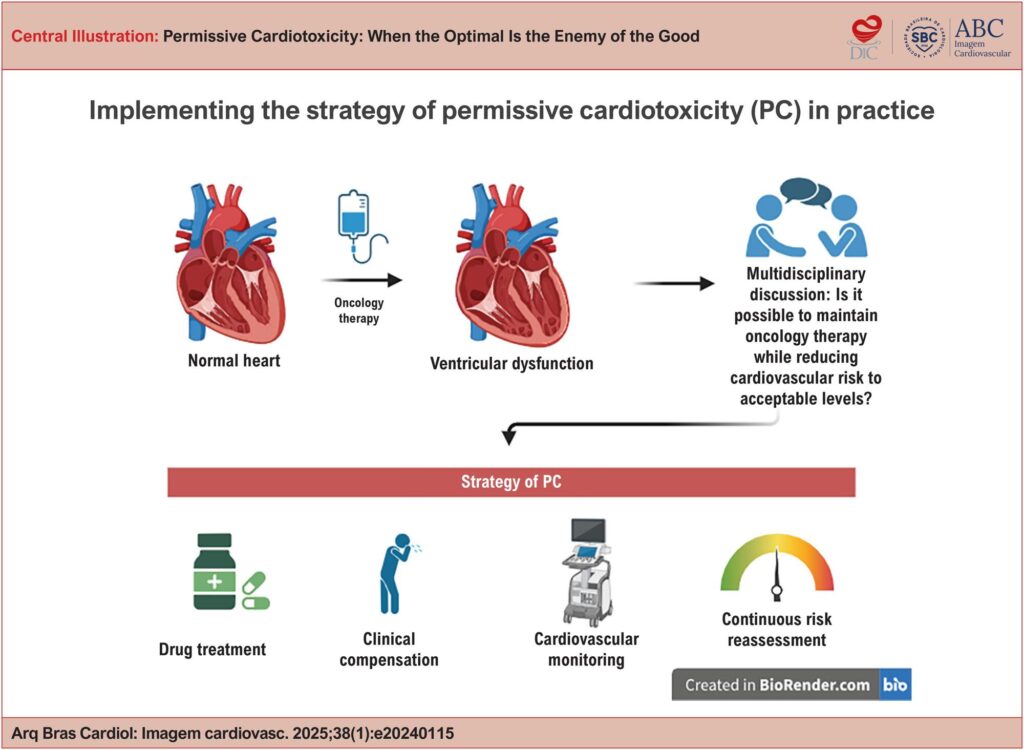
Within this context, the concept of permissive cardiotoxicity (PC) has emerged, proposing the idea of maintaining antitumor treatment in the event that ventricular dysfunction is detected, with no pauses or interruptions, provided that certain premises are respected.
This review aims to examine the concept of PC in depth, contextualizing its emergence, reviewing definitions, and analyzing the evidence from experimental clinical studies. Furthermore, management strategies are detailed, discussing the central role of cardiovascular imaging in guiding this management. Finally, limitations and gaps in the literature in the area are discussed.
1,423