Arq Bras Cardiol: Imagem cardiovasc. 2024; 37(3): e20240077
New Perspectives in The Assessments of Left Atrial Function in Athletes

DOI: 10.36660/abcimg.20240077i
Abstract
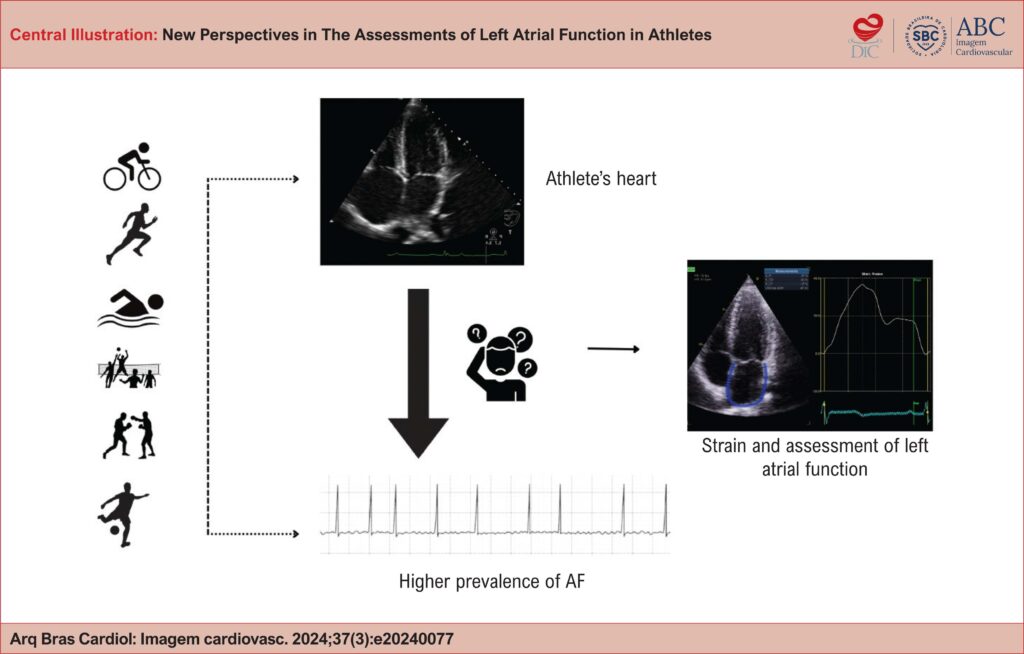
In high-performance athletes, especially those who practice endurance sports that involve high-intensity training for long periods, the heart shows electrical, functional, and structural changes, increasing the likelihood of ventricular and atrial arrhythmias. It is already known that these athletes have increased left atrium (LA) diameter and indexed volume. However, the effects of these changes on atrial function are not yet fully understood. The mechanics of the LA involve three functions: 1) it acts as a reservoir that collects venous flow from the pulmonary veins, occurring during ventricular systole; 2) it acts as a conduit, allowing the passive filling of the left ventricle; and 3) it acts as a contractile pump, expressed by atrial contraction. Recently, the analysis of atrial function through myocardial deformation using the speckle tracking technique has been increasingly used and contributed to the understanding of atrial mechanics. Endurance athletes have greater atrial adaptations, including greater LA diameter and volume, probably caused by the repetitive and sustained increase in effort preload to meet the cardiac output demand during high-intensity training. In addition to an increased LA, studies have shown a reduced reservoir function in athletes when compared to the control group. Therefore, we believe these findings may contribute to a more effective stratification of patients at higher risk of developing atrial fibrillation (AF). Finally, we understand that further studies are needed to better understand the dose-response relationship between exercise and left atrial function.
Keywords: Athletes; Atrial Function; Echocardiography
806