Arq Bras Cardiol: Imagem cardiovasc 2024; 37(3): e20240051
My Approach to Transcranial Doppler Combined With Transthoracic and Transesophageal Echocardiography to Investigate PFO

DOI: 10.36660/abcimg.20240051i
Abstract
This review article explores the combined use of Transcranial Doppler (TCD) with transthoracic (TTE) and transesophageal (TEE) echocardiography to investigate Patent Foramen Ovale (PFO), a condition found in approximately 25-27% of the adult population. PFO is a remnant of fetal circulation and the most common cause of interatrial shunt. It is associated with clinical complications such as platypnea-orthodeoxia syndrome, obstructive sleep apnea, migraine, and stroke.
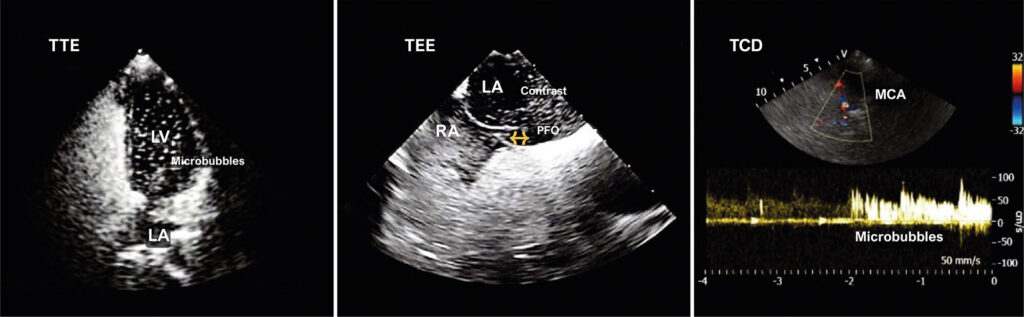
PFO assessment is generally performed using TTE and TEE, but TCD, a highly sensitive and less used method, is also important. TCD indirectly detects shunts in awake patients and uses the microembolic signal (MES) grading score to classify shunt severity. This technique involves injecting a contrast solution into the antecubital vein during the Valsalva maneuver to detect intracardiac shunt by observing microbubble appearance in the first cardiac cycles.
The case report illustrates the effectiveness of TCD in the initial screening of a patient with suspected PFO using TTE, TCD and TEE. The conclusion highlights that TCD is a crucial diagnostic tool, particularly relevant for the therapeutic management of patients with cryptogenic stroke. Several scientific publications are referenced, providing a theoretical foundation for the combined use of TCD, TTE, and TEE in PFO investigation.
725