Arq Bras Cardiol: Imagem cardiovasc. 2024; 37(2): e20240035
My Approach to Perform Echocardiographic Assessment during Cardiopulmonary Arrest

DOI: 10.36660/abcimg.20240035i
Abstract
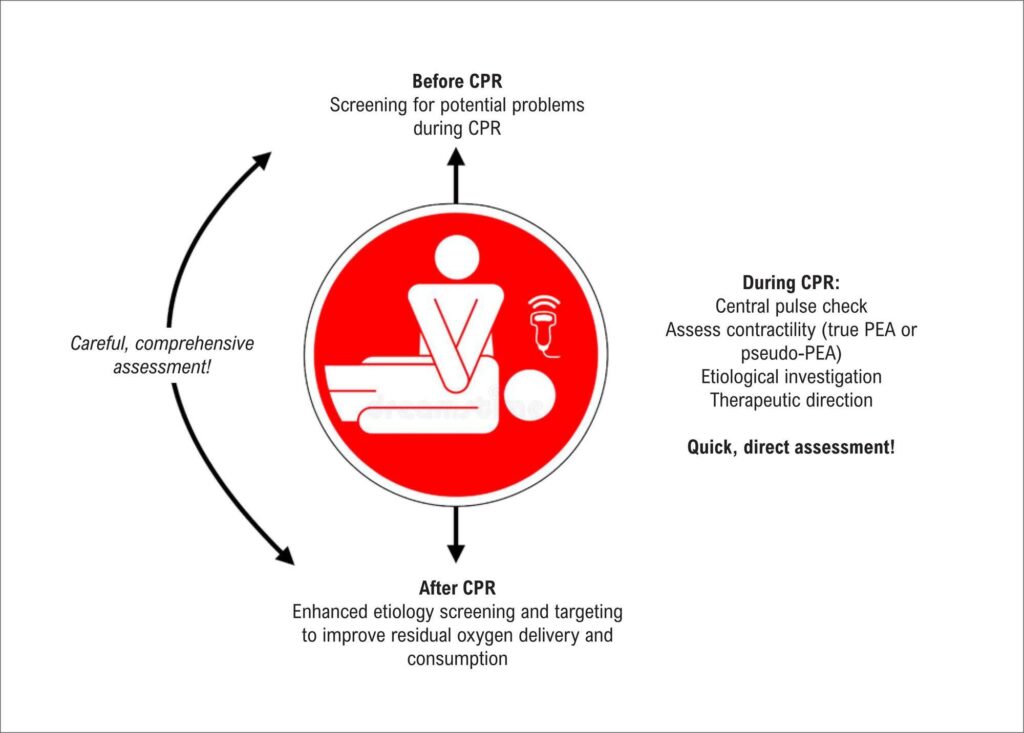
Cardiopulmonary arrest (CPA) is one of the most common events encountered by health care professionals. Attempts to reverse it by performing cardiopulmonary resuscitation (CPR) maneuvers still have very low success rates. Pulseless electrical activity (PEA) and asystole are associated with the worst outcomes. Major CPR guidelines emphasize the importance of identifying potentially treatable causes of CPA. Point-of-care ultrasound (PoCUS), when performed in a systematic, orderly fashion (i.e., without delaying or interfering with other CPR maneuvers), may be important in this change in outcome because it is a diagnostic and prognostic tool used in a scenario where the physical examination is not always conclusive. In this context, the main applications of PoCUS include diagnosis of CPA, differential diagnosis between PEA and pseudo-PEA, and etiologic diagnosis. Several protocols have been developed to optimize the performance of cardiac PoCUS simultaneously with each central pulse check. Pulmonary, abdominal and vascular PoCUS should be performed during resuscitation maneuvers, as they do not interfere with these maneuvers. In addition, PoCUS should preferably be performed by a trained physician who is not actively involved in the resuscitation maneuvers so that the dynamics of CPR are maintained. PoCUS contributes to the diagnosis, prognosis, and therapeutic care of patients suffering from CPA, especially in cases of PEA and asystole; however, there is still no robust evidence that the use of PoCUS reduces mortality among these patients.
Keywords: Cardiorespiratory Arrest; Diagnosis; Echocardiography
732