Arq Bras Cardiol: Imagem cardiovasc. 2021; 34(2): eabc196
Left Atrial Reserve Function in Assessing Indeterminate Diastolic Function
DOI: 10.47593/2675-312X/20213402eabc196
Abstract
Background
Elevation of left ventricular filling pressures secondary to diastolic dysfunction plays a central role in the pathophysiology of heart failure. However, international guidelines still fail to diagnose diastolic dysfunction in some cases.
Objective
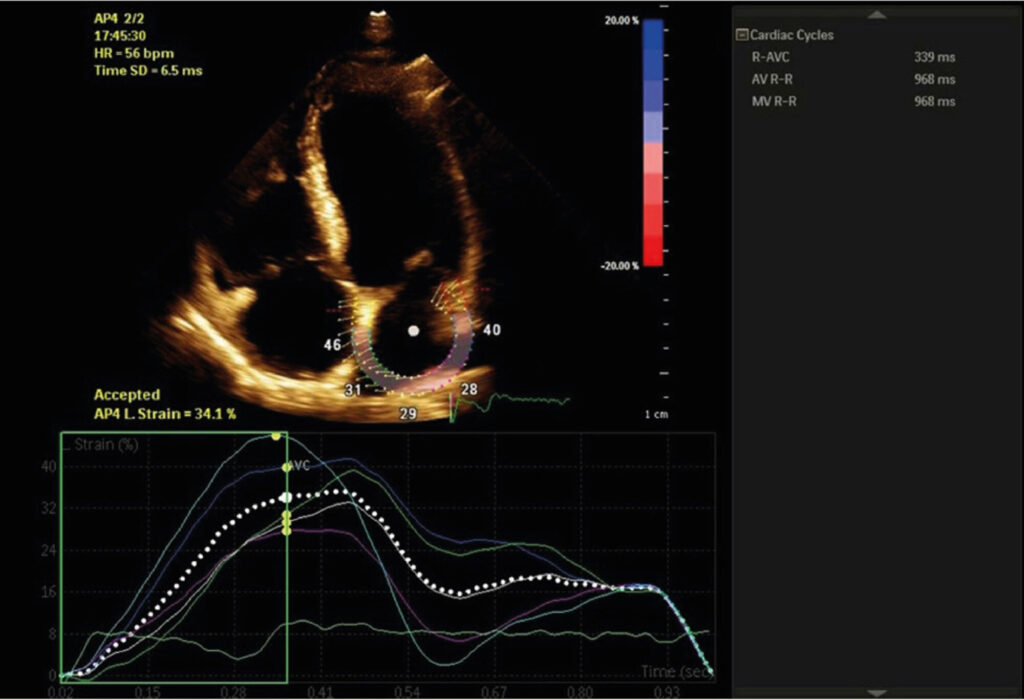
To evaluate left atrial reservoir function in indeterminate diastolic function
Method
Observational study with individuals in sinus rhythm and preserved left ventricular ejection fraction, submitted to echocardiogram and divided into three groups according to the combined analysis of E/e´ ratio and indexed left atrium volume: Group 1, if normal left ventricular filling pressures; Group 2, if increased left ventricular filling pressures and Group 3, if indeterminate left ventricular filling pressures. Two-dimensional speckle tracking was used to measure peak left atrial strain (LAS). Analysis of variance, Student’s t test and receiver-operator curve (ROC) were used in the statistical analysis.
Results
We included 58 patients who had 61 ± 14 years old, 57% of whom were women, and had average left ventricular ejection fraction 62 ± 7%. Groups 2 and 3 had lower LAS than Group 1 (20 ± 5% versus 22 ± 6% versus 30 ± 8%, respectively, p = 0.004), but did not differ between them (p = 0.93). LAS was a good predictor of elevated left ventricular filling pressures (p = 0.026; area under the curve = 0.80), obtaining sensitivity of 60% and specificity of 80% with a cut-off value ≤ 20%.
Conclusion
The findings suggest that the left atrial reservoir function of individuals with indeterminate diastolic function is similar to that of individuals with advanced diastolic dysfunction, rendering LAS the potential to support the reclassification of indeterminate diastolic function.
Keywords: Diastolic function; Echocardiography; Heart failure; Left atrium
731