Arq Bras Cardiol: Imagem cardiovasc. 2024; 37(1): e20230107
How Do I Diagnose and Classify Endomyocardial Fibrosis in Under-Resourced Settings

DOI: 10.36660/abcimg.20230107i
Abstract
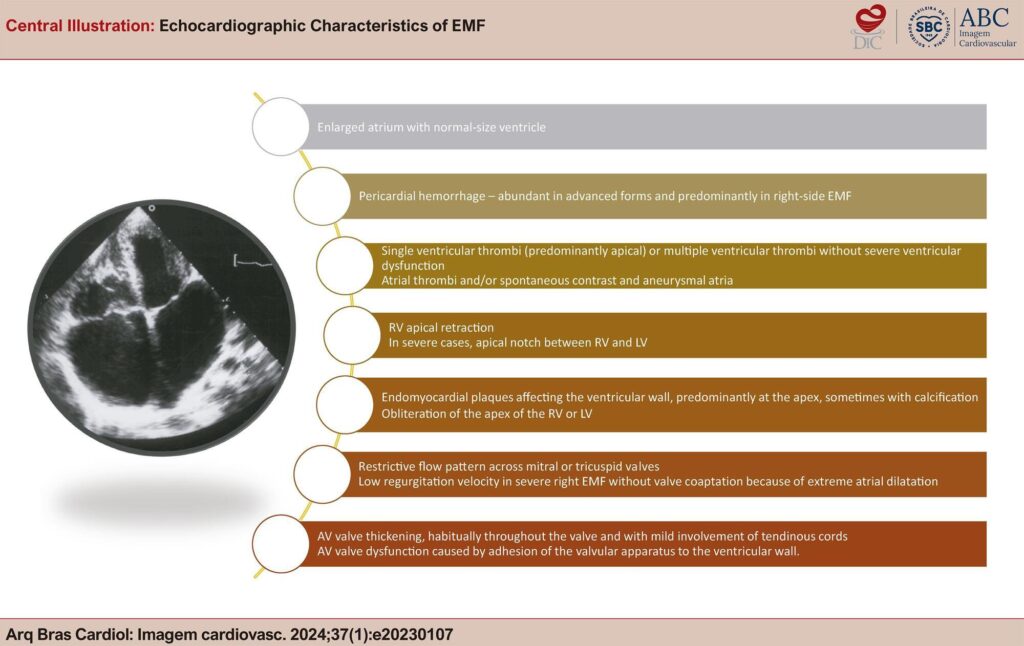
Endomyocardial fibrosis (EMF) is a disease of unclear etiology and pathogenesis that is characterized by fibrosis in the ventricular cavities and mainly affects children and adolescents from tropical regions of Africa, South America, and Asia. It is classified as a restrictive cardiomyopathy, with pathophysiology of restriction to diastolic filling associated with valve abnormalities, both caused by endocardial fibrosis. Typical echocardiographic features of this condition are endocardial thickening, severe atrioventricular (AV) valve regurgitation, aneurysmal atria, and heart distortion.
In endemic areas of Africa, in the absence of advanced imaging techniques, EMF diagnosis and management relies on transthoracic echocardiography for careful assessment of structural and hemodynamic abnormalities, aiming at planning medical or surgical management. This review highlights the key echocardiographic aspects of diagnosis and classification of EMF, as used in under-resourced settings in Africa. This is a standardized approach to screening populations with known occurrence of the disease and for informing medical and surgical management.
Keywords: Diagnosis; Echocardiography; Endomyocardial Fibrosis
1,302