Arq Bras Cardiol: Imagem cardiovasc. 2021; 34(1): eabc108
Diagnostic yield of magnetic resonance imaging in heart failure with left ventricular dysfunction?
DOI: 10.47593/2675-312X/20213401eabc108
Abstract
Background:
Heart failure with reduced ejection fraction is responsible for half of heart failure cases worldwide and implicates in substantial morbidity and mortality. However, even with clinical history and physical examination associated with conventional complementary exams, many patients remain without etiological diagnosis. Cardiac magnetic resonance has offered the possibility to clarify a variable proportion of these cases.
Objective:
To verify how much cardiac magnetic resonance contributes to etiologic diagnosis of heart failure with left ventricular ejection fraction <50% in a specialized service.
Methods:
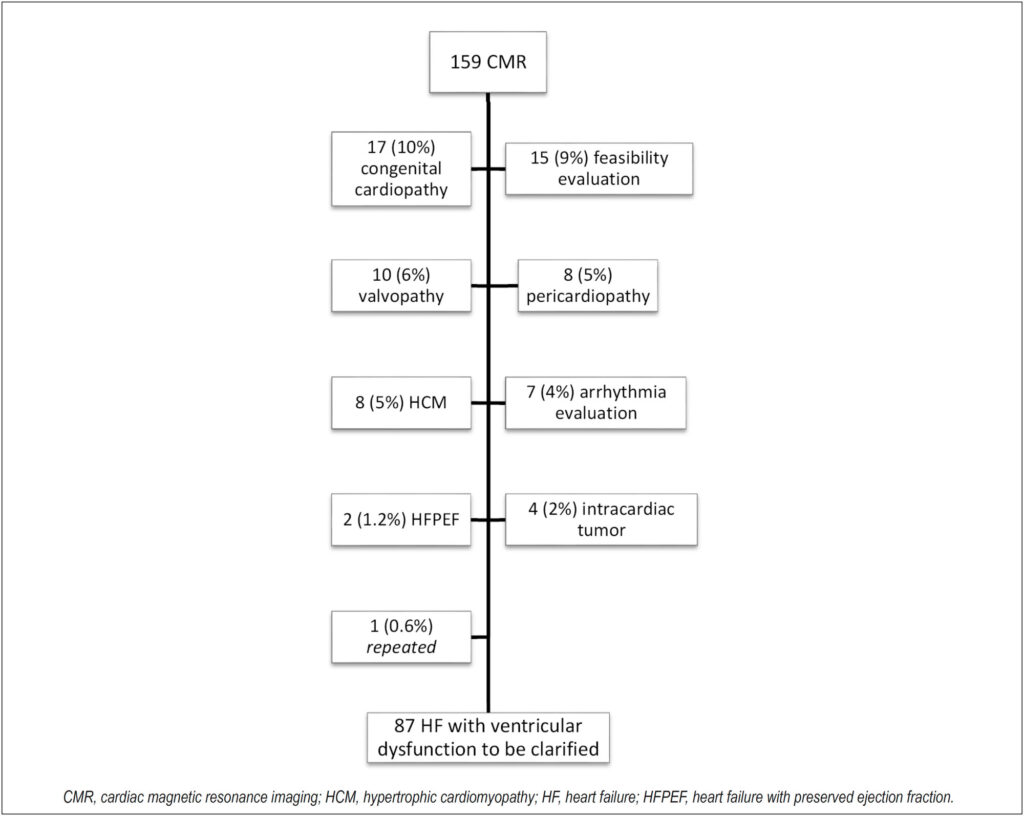
We included individuals referred to cardiac magnetic resonance with heart failure and left ventricular ejection fraction <50% by transthoracic echocardiogram, without defined etiology, from January, 2017 to June, 2018 in a tertiary hospital.
Results:
The sample consisted of 87 patients, with average age of 45±16 years, 49% male and left ventricular ejection fraction 32%±13. Of the patients, 55,3% had etiological diagnosis through cardiac magnetic resonance: 33,4% myocarditis, 11.5% non-compaction cardiomyopathy, 6.8% Chagas disease, and for hypertensive heart disease, amyloidosis and arrhythmogenic right ventricle dysplasia, 1,2% each. Late gadolinium enhancement was positive in 61% and non-ischemic pattern predominated (50,5%). Reverse remodeling occurred with normalization of ventricular function in 13% of patients.
Conclusion:
The performance of cardiac magnetic resonance in patients without etiologic diagnosis of HF with left ventricle dysfunction is clinically significant, since it contributed more than 50% of the time to the etiology and prognosis of patients. This positive impact occurred in a tertiary cardiology teaching service, so it is possible that in other circumstances the role of the cardiac magnetic resonance may be even greater than that here presented.
260