Arq Bras Cardiol: Imagem cardiovasc. 2025; 38(1): e20240071
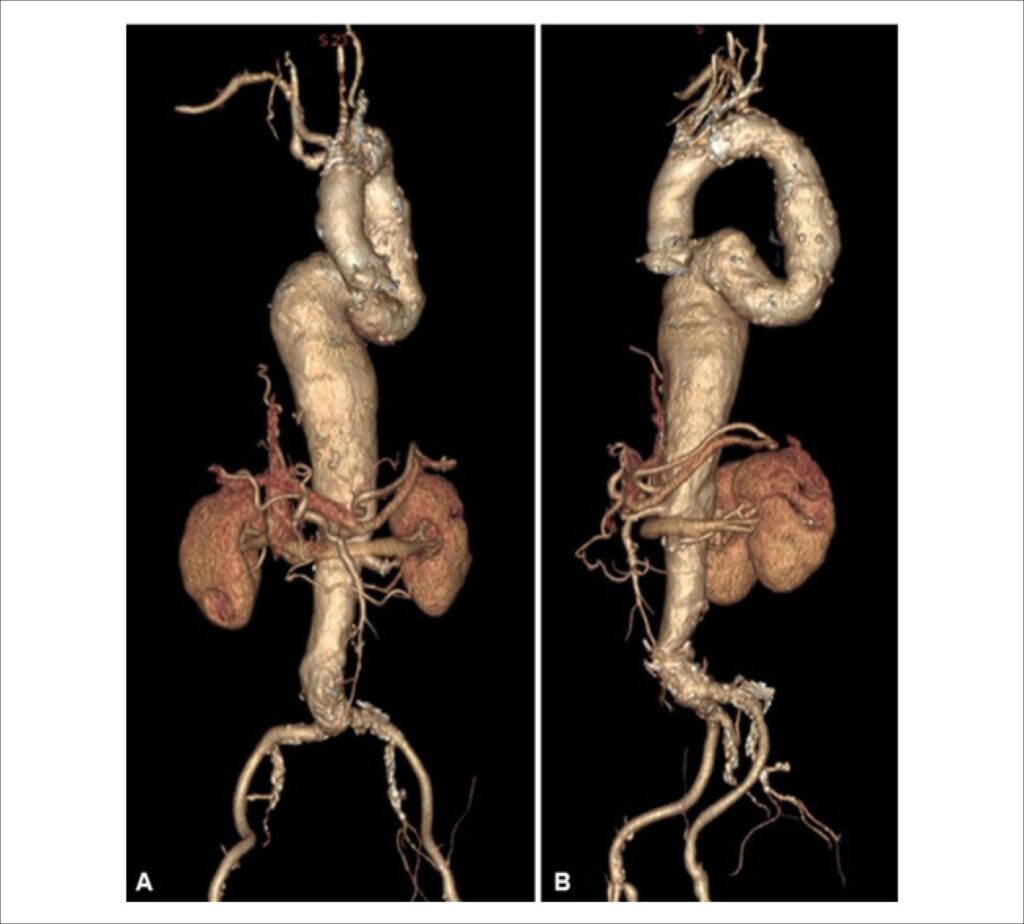
Crawford 2 Thoracoabdominal Aneurysm Associated with Bicarotid Trunk and Aberrant Right Subclavian Artery

DOI: 10.36660/abcimg.20240071i
A 73-year-old woman with a history of hypertension was referred to the vascular surgery department for severe chest pain and signs of shock, including tachycardia and a tendency toward hypotension. An angiotomography revealed a thoracoabdominal aneurysm (Crawford Classification type 2 – ) with rupture signs ( and ) and anatomical variations in the supra-aortic trunks, including an aberrant right subclavian artery (ARSA) ( and ) and a bicarotid trunk (). She underwent emergency surgery with a hybrid approach, which included visceral branching via laparotomy and endovascular repair of the aneurysm. Unfortunately, she developed hemodynamic instability and refractory shock during the procedure, resulting in death. Her family authorized the publication and signed the consent form.
An ARSA is a rare anomaly with a 0.2% to 13.3% prevalence., It is more common among females, individuals with congenital anomalies (up to 3%), and those with Down syndrome (up to 35%). ARSA may be associated with a bicarotid trunk in 0.8% to 20% of cases, where common carotid arteries originate from the same point on the aortic arch. Thoracoabdominal Aortic Aneurysms (TAAAs) represent 10% of all aortic aneurysms. These aneurysms are potentially fatal if not treated early, as they may progress to rupture or dissection. In a São Paulo epidemiological study, the mortality rate for emergency TAAA repairs was nearly double that of elective repairs (42.10% vs. 26.78%). This difference is often attributed to the hemodynamic instability of ruptured aneurysms and the lack of timely preoperative preparation in urgent cases. Anatomical assessment is essential for treating TAAAs, whether through open surgery, endovascular surgery, or hybrid techniques. Anatomical variations in the supra-aortic trunks increase surgical complexity, regardless of the chosen technique.
[…]
Keywords: Anatomic Variation; Aneurysm; Cardiovascular Abnormalities
356